0
Your Cart
0
Your Cart

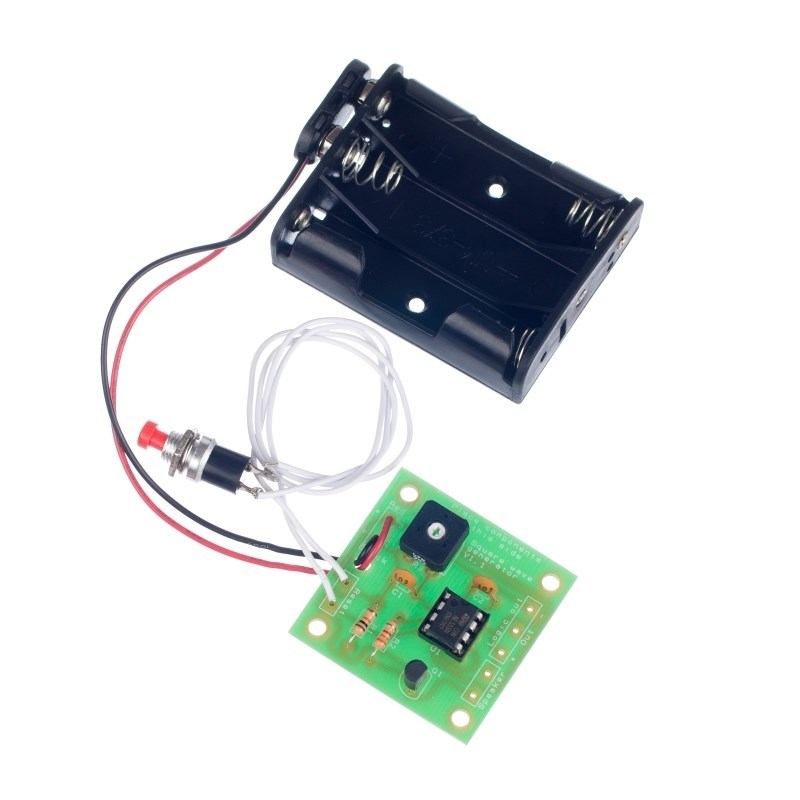
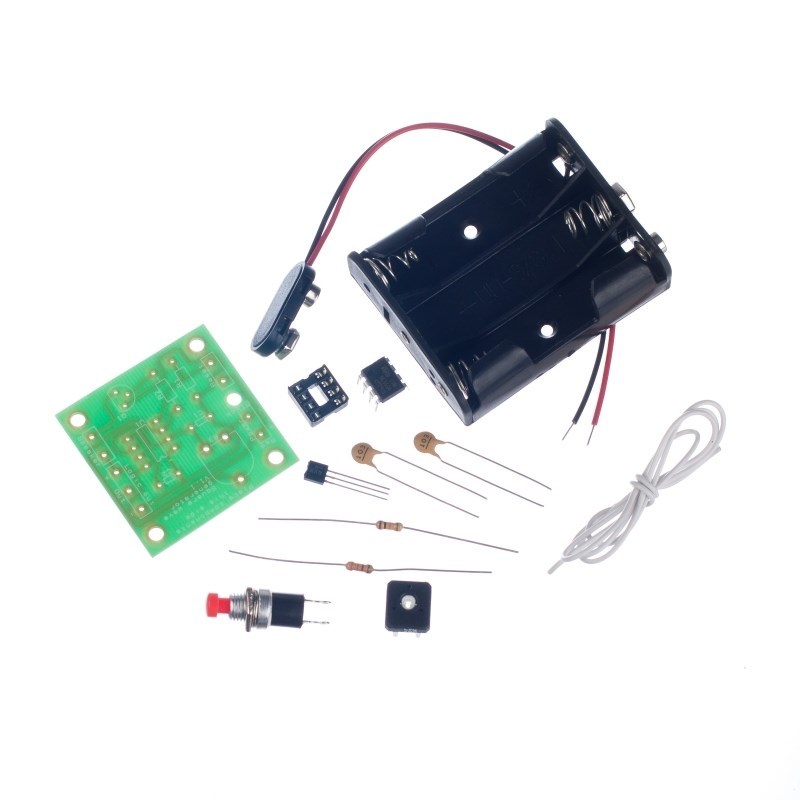
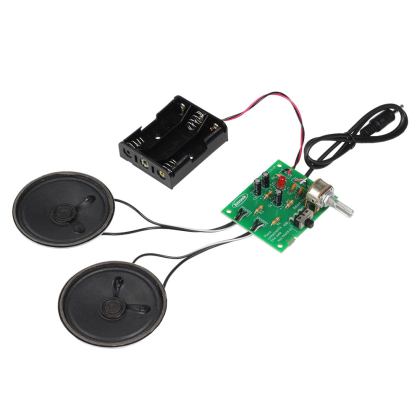
This kit is perfect for GCSE students needing to use a 555 timer in its astable mode, where it produces a square wave output. The frequency of which is adjustable via the variable resistor. The board has a choice of two outputs. The logic output can be used to drive another IC or a speaker can be connected so the tone is heard (e.g. a door bell).

The push button switch connects to the reset line such that the IC is only active when the button is pressed.

Features:

  • The 555 Timer Astable (Tone Generator) Kit produces a square wave output.
  • The frequency of the aquare wave is adjustable via the variable resistor.

Contents:

Dimensions:

  • PCB Length: 40mm.
  • PCB Width: 40mm.

Requires:

Resources:

Note:

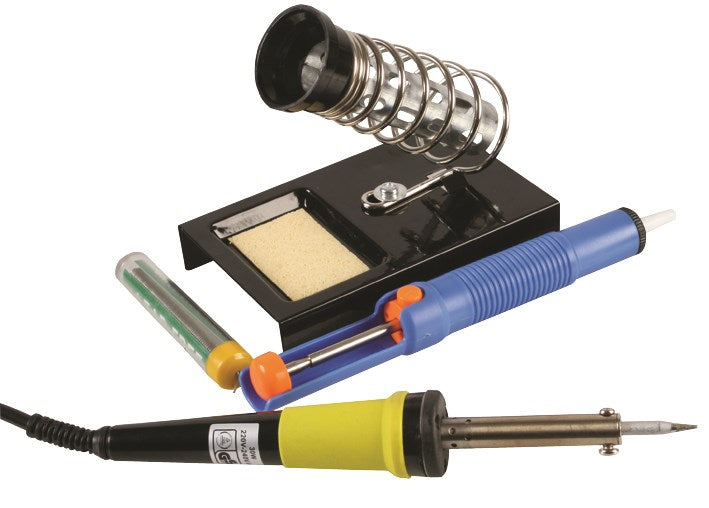
  • This kit requires soldering.
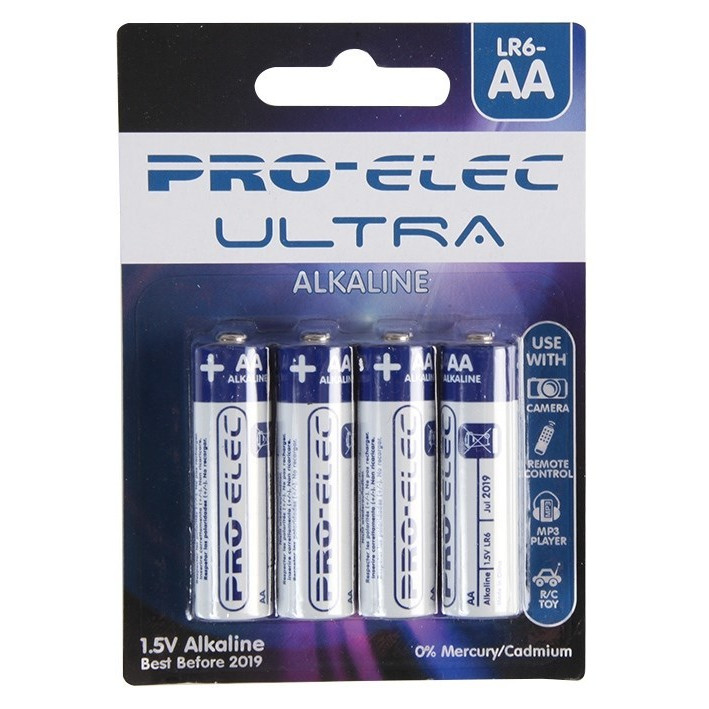
  • Requires x 3 x AA Batteries. and depending upon desired use a speaker, both available separately.
Documents & downloads

Note:

  • This kit requires soldering.
  • Requires x 3 x AA Batteries. and depending upon desired use a speaker, both available separately.
Related resources

Reviews

There are no reviews yet.

Be the first to review “Kitronik 555 Timer Astable (Tone Generator) Kit”

Your email address will not be published. Required fields are marked *

Questions and answers

    Hello,Can I substitute the variable resistor with an LDR to make a light dependant square wave generator i.e. an interesting interactive noise maker. Thanks
  1. 0 votes
    Q Hello,Can I substitute the variable resistor with an LDR to make a light dependant square wave ge...... Read more
    Asked by Kanouras Antonis on November 19, 2018 12:00 am
    Answered by the admin Hello Antonis, Thank you for your question, I am afraid that would not work because of how the PCB is set up to fully connect the circuit you need to use the variable resistor with it's three contact points. Best Regards Cullen
  2. can I vary the duty cycle & the frequency? Ideally about to 80%/20% on a 1 second repeat.I've got various bits & pieces to swap with some of the components.
  3. 0 votes
    Q can I vary the duty cycle & the frequency? Ideally about to 80%/20% on a 1 second repeat.I've...... Read more
    Asked by Richard Lowe on April 25, 2014 12:00 am
    Answered by the admin You can vary the frequency on our circuit by altering the value of R3 or C1

    The frequency = 1.44/(R3 x C1).
  4. can I use a version of this basic circuit to drive a relay in a-stable mode? How? Standard relays; coils can switch at anything 5v & up.
  5. 0 votes
    Q can I use a version of this basic circuit to drive a relay in a-stable mode? How? Standard relays...... Read more
    Asked by Richard on April 24, 2014 12:00 am
    Answered by the admin Yes you can use it to drive a relay. The board has a transistor driven output which can be used to connect to a relay.
  6. Hi, Just a quick question. Can we connect a LED instead of a speaker? What will be the frequency of the LED blink? or for speaker tone, can we adjust the tone to lets say 50 Hz
  7. 0 votes
    Q Hi, Just a quick question. Can we connect a LED instead of a speaker? What will be the frequency ...... Read more
    Asked by Sathish on August 20, 2013 12:00 am
    Answered by the admin Hi Sathish, With the resistor and capacitor combination in that board the minimum frequency you can produce is 4.2kHz. With the right capacitor and resistor values though you should be able to get just about any frequency. If you look at the build instructions for the product which are on this page it lists the formula so you can work out what values you need for any frequency you are after.
  8. Hello There. Just wanted to check, could I easily substitute the potentiometer for an LDR etc?
  9. 0 votes
    Q Hello There. Just wanted to check, could I easily substitute the potentiometer for an LDR etc?
    Asked by Graham on July 26, 2013 12:00 am
    Answered by the admin Hi Graham! That should be fine. One thing to note is that the resistance/light curve on an LDR drops off exponentially with the amount of light falling on the LDR. This might make it difficult to precisely control the pulse width when compared to using the potentiometer which has a much more linear response.
  10. How long could the delay be between each peak, or high, of the wave with the variable resistor on the highest setting?
  11. 0 votes
    Q How long could the delay be between each peak, or high, of the wave with the variable resistor on...... Read more
    Asked by Will on September 7, 2012 12:00 am
    Answered by the admin The minimum frequency is 3.2KHz which will give a time of 0.0003125 Seconds. The circuit is explained in the build instructions that can be downloaded on the product page.
To submit a question, please login or create an account