0
Your Cart
0
Your Cart

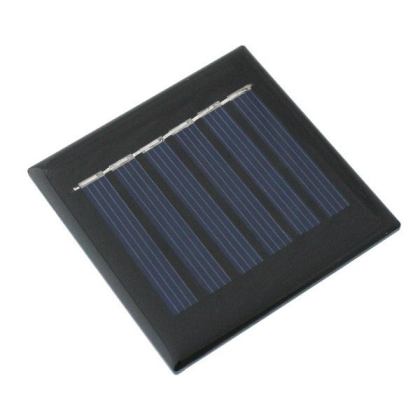
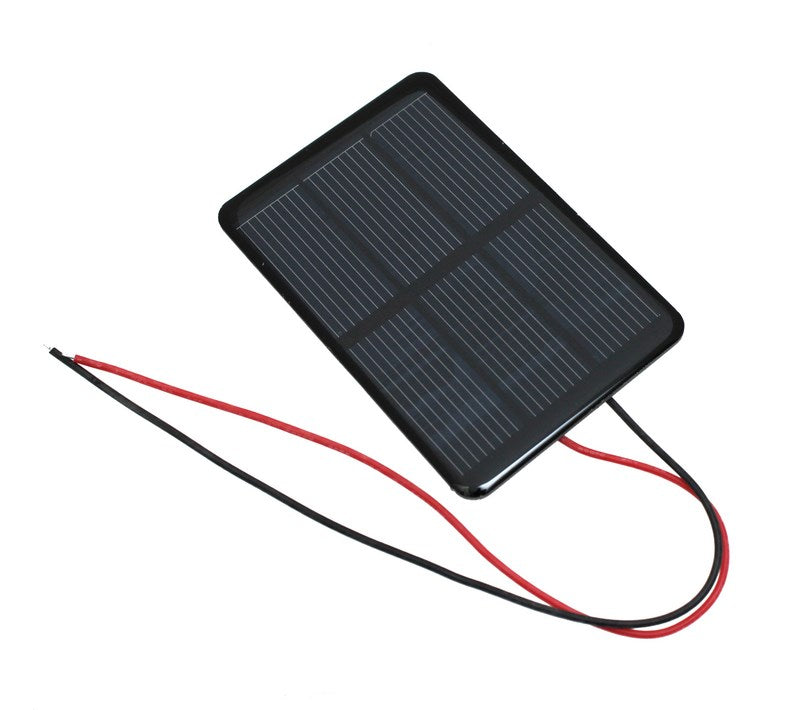
This is a 1.5V Polycrystalline Solar Cell with PET laminated finish, to ensure it has a waterproof cell face and therefore is suitable for many applications.

Solar power cells make great introductions to solar power projects, suitable for things such as outside lights.

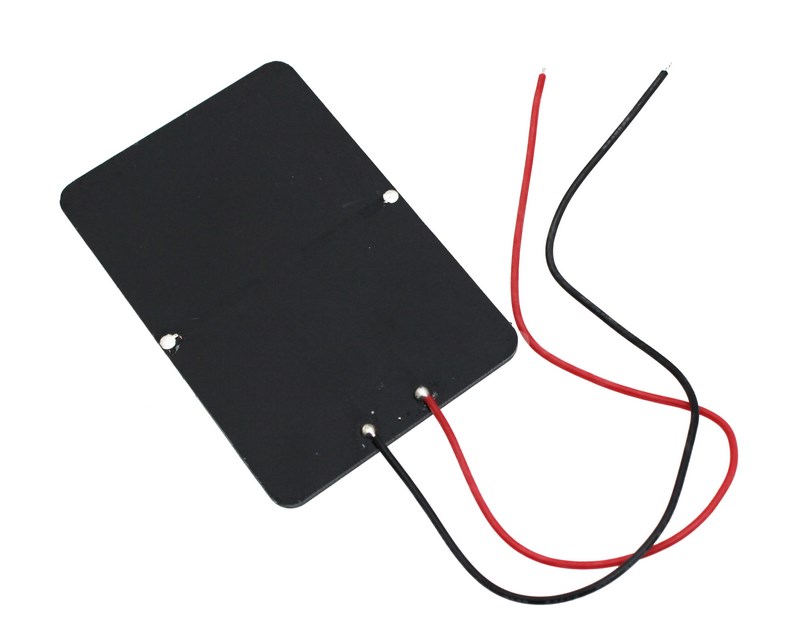
Rear mounted solder pads with 20cm leads for easy attachment.

It provides a maximum current of 400mA, at a power of 0.6W, and does NOT include a blocking diode. In projects where this solar cell is used to charge batteries a blocking diode must be added to the circuit in order to prevent the batteries discharging back into the cell when it gets dark.

Features:

  • 1.5V solar cell.
  • Maximum current: 400mA.
  • Maximum power: 0.6W.

Contents:

  • 1 x 1.5V 400mA, Polycrystalline Solar Cell with 20cm leads.

Dimensions:

  • Width: 60mm.
  • Length: 90mm.
  • Height: 3mm.

Resources:

Documents & downloads

Related resources

This product doesn't have any resources.

Reviews

There are no reviews yet.

Be the first to review “1.5V 400mA Polycrystalline Solar Cell”

Your email address will not be published. Required fields are marked *

Questions and answers

    I tried to connect this with your low inertia solar motor 1820rpm and it won't power it up. I used a battery and managed to power up the motor. The motor operates on 0.5-3V and this should provide 1.5V. Please help if u can.
  1. 0 votes
    Q I tried to connect this with your low inertia solar motor 1820rpm and it won't power it up. I use...... Read more
    Asked by Youcef Belkhiter on January 25, 2019 12:00 am
    Answered by the admin Hi Youcef, Although you are correct that this solar cell would provide 1.5V's it is likely you aren't providing enough current for the motor. At best conditions (bright sun, with no clouds) the solar cell would produce around 400mA. This would be far less in overcast conditions.
  2. Is it possible to connect 3 of these is series to give 3 times the voltage at the same current output (400mA)
  3. 0 votes
    Q Is it possible to connect 3 of these is series to give 3 times the voltage at the same current ou...... Read more
    Asked by Will on November 6, 2018 12:00 am
    Answered by the admin Hi Will,

    Yes that is correct, you can do that provided your components can take the voltage.

    Best Regards

    Cullen
  4. You said that the 1.5V 400mA is a best case scenario. Should I use 2 panels then? Is so, should I connect them in series or in parallel? I would prefer to have some movement at lower light levels.
  5. 0 votes
    Q You said that the 1.5V 400mA is a best case scenario. Should I use 2 panels then? Is so, should I...... Read more
    Asked by Douglas Grainger on November 28, 2017 12:00 am
    Answered by the admin Hi Douglas, You could use 2 solar cells to improve the amount of current you produce, if you put them in parallel you would keep the voltage at 1.5V but increase the current, this is likely the better option.
  6. Hello, is one of these solar panels enough to run your geared solar motor?
  7. 0 votes
    Q Hello, is one of these solar panels enough to run your geared solar motor?
    Asked by Douglas Grainger on November 22, 2017 12:00 am
    Answered by the admin Hi Douglas, If you are referring to this item, https://www.kitronik.co.uk/2560-solar-motor-with-gearbox.html then yes you should be able to power the motor and gearbox with this solar cell. Please be aware that the 1.5V 400mA stated would be a best case scenario, in normal conditions you would see less than this.
  8. Would this 400mA solar panel replace a 1.5v AA battery powering a small motor turning a static model aircraft propeller
  9. 0 votes
    Q Would this 400mA solar panel replace a 1.5v AA battery powering a small motor turning a static mo...... Read more
    Asked by Darryl on August 1, 2017 12:00 am
    Answered by the admin Hi Darryl, You may be able to change the batteries to the solar cell. The issue would be the current draw of the motor, 400mA would be the best case scenario for the solar cell to produce. In British summer time light you might only get half that or maybe even less. If you put a multi meter across the motor and power it using the batteries you can then find out what current it is drawing.
To submit a question, please login or create an account